What Does a 12V Solar Setup Actually Cost? A Brutally Honest 2024 Budget Breakdown
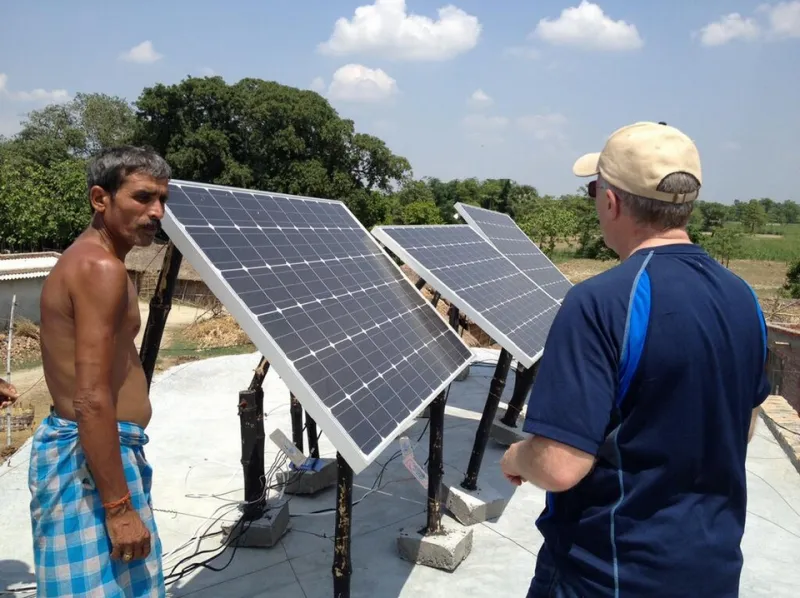
Photo: Brad Mattson, CC BY-SA 3.0, via Wikimedia Commons
Let's skip the fluff. You've watched the YouTube videos, you've pinned the off-grid cabin photos, and now you want to know one thing: how much is this actually going to run me?
The honest answer is: it depends. But that's not good enough for a real budget, so we're going to get specific. Whether you're outfitting a weekend RV, powering a remote hunting cabin in Montana, or building a permanent off-grid homestead in the Arizona desert, this breakdown covers what you'll actually spend — including the stuff most guides conveniently leave out.
The Two Worlds of 12V Solar: Budget Builds vs. Premium Systems
Before we get into line items, it helps to understand that 12-volt solar setups generally fall into two broad camps.
Budget builds ($2,000–$5,000) are designed to cover the basics: lights, phone charging, a small refrigerator, maybe a fan or two. These are popular with RV owners, van lifers, and folks who want off-grid capability without going all-in. You're typically looking at 400–800 watts of solar panels, a 100–200Ah battery bank, and a basic MPPT charge controller.
Premium systems ($10,000–$20,000+) are a different animal entirely. These are built for full-time off-grid living — running a full-size fridge, washing machine, power tools, and sometimes even a mini-split AC unit. Expect 2,000+ watts of panel capacity, lithium battery banks in the 400–600Ah range, and a quality inverter-charger that can handle surging loads.
Most people land somewhere in the middle, and that's completely fine. The key is knowing what tier you actually need before you start buying parts.
Breaking Down the Core Components
Solar Panels
This is usually where people start, and honestly, panel prices have never been more favorable. In 2024, quality 100-watt panels run roughly $80–$120 each from reputable brands. For a budget system, plan on 4–6 panels ($400–$700 total). A premium setup might need 16–20 panels, pushing that cost to $1,500–$2,500.
If you're mounting on an RV roof, factor in flexible panels, which cost a bit more but lie flat and handle vibration better.
Charge Controllers
Don't cheap out here. A quality MPPT charge controller — which is far more efficient than a PWM unit — runs $80–$250 for a budget system and $300–$600 for larger setups. Victron and Renogy are two brands that consistently earn good marks from the off-grid community.
Battery Banks
This is where the biggest cost gap between budget and premium really shows up.
- Lead-acid (AGM or gel): $150–$300 per 100Ah. Cheaper upfront, but they need to be replaced every 3–5 years and can't be discharged below 50% without damage.
- Lithium (LiFePO4): $400–$900 per 100Ah. Higher initial investment, but they last 10+ years, can discharge to nearly zero, and require zero maintenance.
For a budget system with 200Ah of AGM, you're spending around $400–$600. A premium lithium bank of 400Ah will run $1,600–$3,600 depending on brand.
Over a 10-year horizon, lithium almost always wins on total cost of ownership. Something worth keeping in mind when you're staring at that upfront price tag.
Inverters
If you want to run standard 120V AC appliances — and most people do — you'll need an inverter. A basic 1,000-watt pure sine wave inverter costs $100–$200. A 3,000-watt inverter-charger combo (which can also charge your batteries from shore power or a generator) runs $400–$1,200.
Wiring, Fusing, and Mounting Hardware
Here's one of those hidden costs beginners consistently underestimate. Proper wiring for a 12V system isn't just running a couple of cables — you need the right gauge wire for each run, marine-grade connectors, bus bars, breakers, and fuse blocks. Budget $200–$600 for wiring materials alone, depending on system size.
Mounting hardware for panels (whether on a roof, ground mount, or tilt rack) adds another $100–$400.
The Hidden Costs Nobody Talks About
Installation Labor
If you're doing this yourself, great — DIY is a huge part of the off-grid culture and can save you $1,000–$3,000 in labor. But if you're hiring an electrician or solar installer, expect to pay $50–$100 per hour, and a full system installation can take 8–20 hours.
Permits and Inspections
For permanent off-grid homes, some counties require permits for electrical work. This varies wildly by state — rural areas in Wyoming or Idaho may have almost no requirements, while California counties can add $300–$800 in permit fees and inspection costs.
Energy Monitoring
This one's optional but seriously useful. A battery monitor like the Victron BMV-712 (~$120) tells you exactly what's going in and out of your batteries. Flying blind without one often leads to dead batteries and premature replacements. Consider it cheap insurance.
System Expansion
Almost everyone underestimates how much power they actually use once they're living off-grid full-time. Budget at least 20% of your initial system cost as a mental reserve for expansion — whether that's adding panels, upgrading your battery bank, or adding a second charge controller.
ROI by Region: Where Solar Really Pays Off
Your location dramatically affects how fast your system pays for itself compared to grid power.
- Southwest (Arizona, New Mexico, Nevada): 5–6 peak sun hours daily. These are golden zones for solar ROI. A $5,000 system replacing $150/month in grid costs pays back in roughly 3–4 years.
- Pacific Northwest (Oregon, Washington): 3–4 peak sun hours, and cloudy winters can be rough. ROI stretches to 6–8 years, and battery sizing becomes more critical.
- Southeast (Florida, Georgia): Great sun, but hurricane season means your system needs to be mounted and secured properly. ROI similar to the Southwest.
- Upper Midwest and Mountain States: Short winter days mean you need to oversize your system for year-round reliability. Add 20–30% to your panel budget if you're in Minnesota, Montana, or Colorado at elevation.
So What Should You Actually Budget?
Here's a quick snapshot to take with you:
| System Type | Who It's For | Estimated Total Cost |
|---|---|---|
| Starter RV/Van System | Weekend warriors, light users | $1,500–$3,000 |
| Mid-Range Off-Grid Cabin | Part-time or seasonal use | $4,000–$7,000 |
| Full-Time Off-Grid Home | Year-round, family use | $10,000–$20,000+ |
These are real-world numbers that account for quality components, proper wiring, and a little breathing room. If you see a YouTube build that came in way under these figures, look closely — they probably skipped the fusing, used undersized wire, or went with panels that won't last five years.
Final Thoughts
Off-grid solar isn't cheap — but it's not a money pit either, especially when you plan it right. The folks who end up frustrated are usually the ones who bought the cheapest kit they could find, maxed it out immediately, and then had to start over.
Build for where you're going, not just where you are today. Price out quality components, account for the hidden costs, and factor in your region's solar potential. Do that, and your 12V solar system won't just power your home — it'll be one of the smartest investments you ever make.