Tiny Connections, Massive Losses: What Corroded Terminals Are Really Costing Your Solar Setup
Here's a scenario that plays out more often than most off-gridders want to admit: your solar panels are clean, your charge controller is reading normal, and your battery bank looks healthy on paper. But something feels off. Your lights dim a little earlier than they should. Your fridge cycles more than usual overnight. You're not quite making it through the day.
You start second-guessing your panel wattage, your battery capacity, your inverter. You start shopping for upgrades.
But the real culprit might be something you can barely see — a thin film of oxidation on a terminal, a crusty ring around a connector, a slightly greenish tinge on a wire end. Corrosion. The slow, quiet thief that doesn't show up on any meter reading until things get genuinely bad.
Let's talk about what's actually happening, where to look, and how to stop it before it turns into a real problem.
Why Corrosion Is Such a Big Deal in 12V Systems
At higher voltages, a little resistance from a corroded connection gets lost in the noise. At 12 volts, there's no room to hide. Even a fraction of an ohm of added resistance across a connection can translate to meaningful voltage drop, heat buildup, and reduced current delivery — all of which quietly chips away at your system's real-world output.
The physics here is straightforward: voltage drop equals current times resistance (V = IR). In a 12V system pulling 20 amps through a corroded terminal with just 0.05 ohms of extra resistance, you're already losing a full volt. That's over 8% of your system voltage gone before the power even reaches your loads. Scale that across multiple corroded connections and you're not running a 12V system anymore — you're running something closer to a 10V system pretending to be 12.
And that heat we mentioned? It accelerates the corrosion further. It's a self-reinforcing cycle that gets worse the longer you ignore it.
The Usual Suspects: Where Corrosion Hides
Not all connections in your system are equally vulnerable. Some spots are practically magnets for oxidation and degradation.
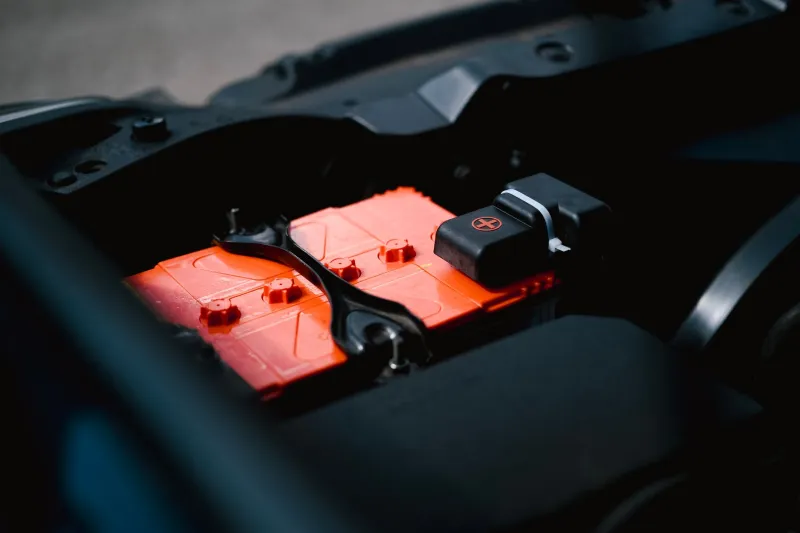
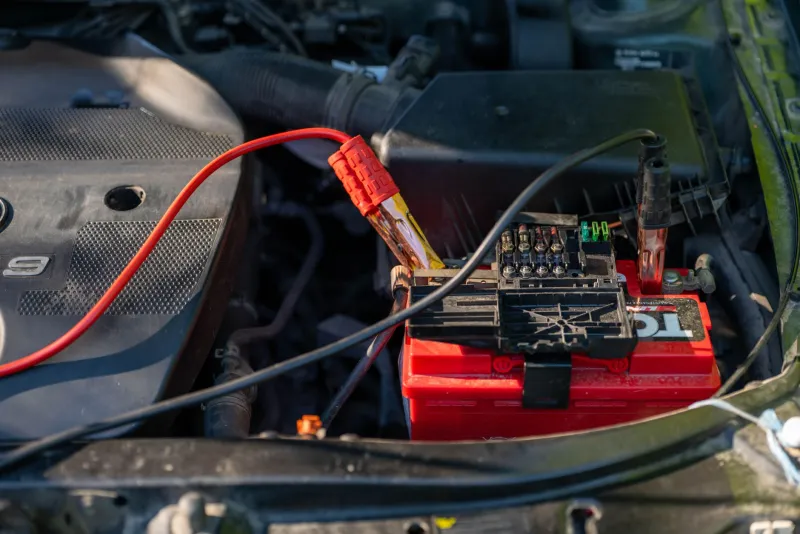
Battery terminals are the most obvious. Lead-acid batteries — flooded, AGM, or gel — off-gas hydrogen sulfide and sulfuric acid vapor during charging. That vapor settles on the terminals and slowly eats through bare metal, creating that familiar white or bluish crust. Even lithium batteries aren't immune, though they tend to have cleaner chemistry at the terminal level.
Anderson Powerpole and MC4 connectors are workhorses in 12V solar setups, but they're not invincible. MC4 connectors are rated for outdoor use, but the locking seals degrade over time — especially in environments with wide temperature swings, like an RV baking in a Texas summer and then sitting in a Minnesota winter. Once moisture gets past a compromised seal, oxidation starts on the internal contacts.
Fuse holders and blade fuses are sneaky ones. The contact between a blade fuse and its holder is a small surface area under spring tension. Vibration from road travel, thermal expansion and contraction, and ambient humidity all conspire to loosen that contact and invite corrosion in. A fuse that looks fine might be adding significant resistance to your circuit.
Ground connections — especially where a wire ring terminal meets a metal chassis or busbar — are chronically underappreciated failure points. Paint, mill scale, and surface oxidation on the mounting surface can all create high-resistance ground paths that wreak havoc on system performance and can even cause erratic behavior in sensitive electronics like inverters and charge controllers.
How to Actually Find the Problem
You don't need a lab to track down corroded connections. A decent multimeter and some patience will get you most of the way there.
The technique is called a voltage drop test, and it's simple. With your system under load — don't do this with everything switched off — put one probe on each side of a connection you're testing. If you're seeing more than 0.1 to 0.2 volts across any single connection, that connection deserves attention. More than 0.5 volts and you've found a real problem.
Visually, look for:
- White, blue, or green powdery buildup on battery terminals
- Darkened or discolored metal at connector mating surfaces
- Wire insulation that looks melted or discolored near a terminal (that's heat damage from resistance)
- Terminals that feel loose or move slightly when wiggled
- Any connector where the plastic housing has yellowed or cracked
A thermal camera — even a cheap smartphone attachment — can be incredibly useful here. Corroded, high-resistance connections run warm under load. A quick scan of your wiring while the system is working hard can light up problem spots immediately.
Cleaning It Up: The Right Way
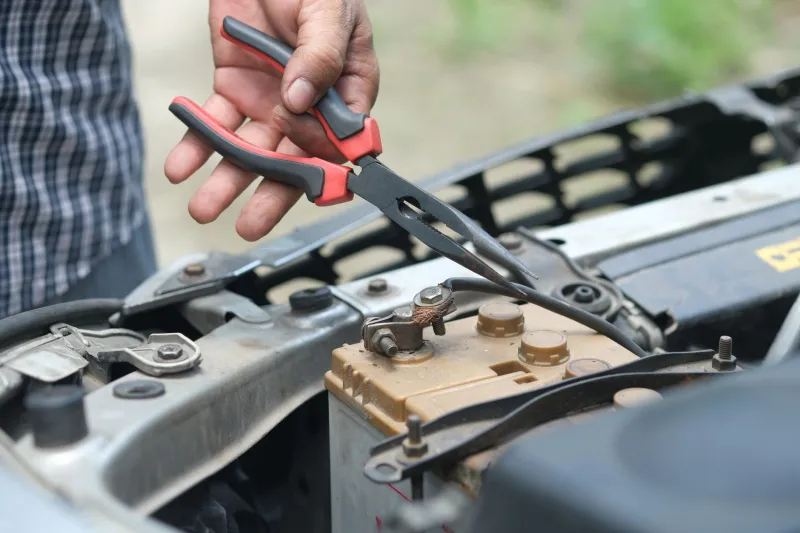
For battery terminals with that classic crusty buildup, a paste of baking soda and water neutralizes the acid residue. Apply it, let it fizz, then rinse with clean water and dry thoroughly. After cleaning, use a wire brush or terminal cleaning tool to get back to bare metal, then coat with a dielectric grease or a purpose-made terminal protector spray before reconnecting.
For MC4 connectors that are showing oxidation on the internal pins, the honest answer is often replacement. MC4s are cheap enough that cleaning and resealing a degraded connector rarely makes sense — a new pair costs a few dollars and gives you a fresh, known-good connection.
For ring terminals and ground connections, disconnect, clean the mounting surface down to bare metal with sandpaper or a wire brush, apply a thin coat of dielectric grease, reconnect, and torque properly. Don't rely on spring tension alone — use a lock washer and make sure the fastener is snug.
Building a Maintenance Schedule That Actually Works
The best time to catch corrosion is before it becomes a performance problem. A twice-yearly inspection covers most situations — once in the spring before peak solar season, and once in the fall before winter storage or reduced-use periods.
During each inspection:
- Visually check every accessible terminal and connector
- Run voltage drop tests on your main battery connections and any connector you can probe
- Check fuse holders for discoloration or looseness
- Inspect MC4 connectors for cracked or brittle housing
- Verify all ground connections are tight and corrosion-free
If you're in a coastal environment, live in a high-humidity region, or do a lot of driving (which means more vibration), bump that to quarterly. Salt air is particularly aggressive toward copper and aluminum connections.
The Upgrade Worth Making
If you're regularly fighting corrosion on your battery terminals, tinned copper ring terminals are worth the modest extra cost over bare copper. The tin coating resists oxidation significantly better and holds up longer in harsh environments. Same goes for marine-grade wire — the tinned conductors inside are far more resistant to the internal oxidation that can degrade a wire even when the insulation looks fine from the outside.
Your 12V solar system is only as strong as its weakest connection. Panels and batteries get all the attention, but the connectors holding everything together deserve a seat at the table. A little inspection time twice a year is a lot cheaper than chasing phantom performance problems — or replacing gear that didn't actually need replacing.