Solar Panels Charge It, Lithium Keeps It: How to Build an Off-Grid Power Duo That Actually Works
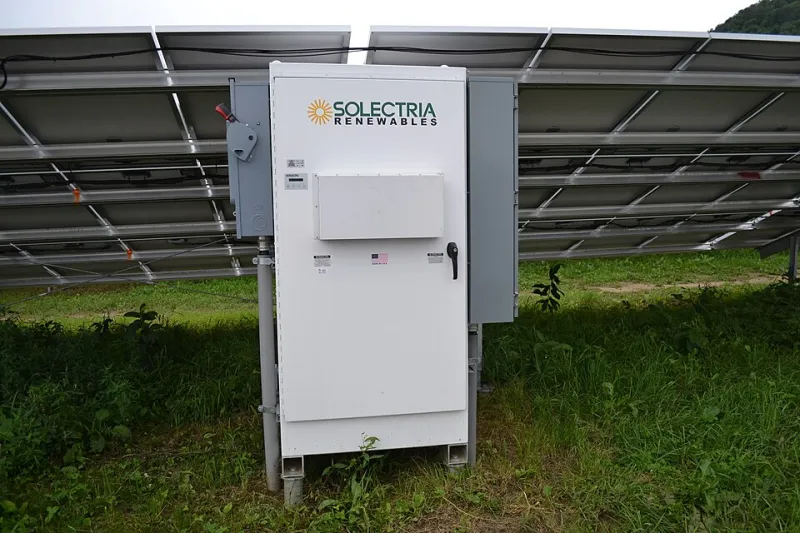
Photo: SayCheeeeeese, CC0, via Wikimedia Commons
The Misconception That's Costing Off-Gridders Money
A lot of people shopping for their first off-grid setup come in thinking they need to choose: solar panels or a big battery bank. Some go heavy on panels and skimp on storage. Others drop a couple grand on lithium batteries and slap on a tiny panel kit as an afterthought. Both approaches lead to the same frustrating result — a system that works fine on paper and fails you when it matters.
Here's the reality: 12-volt solar panels and lithium battery storage aren't competitors. They're partners. And understanding what each one actually contributes — and where each one genuinely struggles — is the foundation of any solid off-grid power build.
What Solar Panels Do (And What They Can't)
Your 12V solar panels do one thing: convert sunlight into electricity. That's it. While the sun is shining, they're generating power. The moment a cloud rolls in, the sun dips behind a tree line, or evening hits, that generation drops — sometimes to zero.
This is the fundamental limitation of solar that no panel manufacturer is going to put in big letters on the box. Solar is an intermittent source. It doesn't care that you need power at 11 PM to run your CPAP machine or that you're parked under a dense canopy in the Smoky Mountains. Panels generate when conditions allow, full stop.
That said, what solar does well, it does really well. Once installed, it generates power for free. No fuel costs, no moving parts to wear out, minimal maintenance. A quality 100-watt 12V panel can last 25 years or more. For off-grid living, that kind of long-term reliability is hard to beat.
What Lithium Batteries Bring to the Table
Lithium iron phosphate (LiFePO4) batteries — the chemistry most commonly recommended for 12-volt off-grid systems — solve the intermittency problem. They store the energy your panels generate during peak hours and release it whenever you need it, day or night, sun or clouds.
Compared to older lead-acid battery banks, lithium offers a few critical advantages:
- Usable capacity: You can safely discharge a lithium battery to around 80–90% of its rated capacity. Lead-acid batteries max out at about 50% before you start damaging them. A 100Ah lithium battery genuinely gives you close to 100Ah of usable power.
- Charge efficiency: Lithium accepts a charge faster and more efficiently, which means your solar panels spend less time pushing electrons into a battery that's resisting the input.
- Cycle life: Quality LiFePO4 cells are rated for 2,000–5,000 charge cycles. A comparable lead-acid bank might last 300–500 cycles.
- Weight: For RVers especially, this matters. A 100Ah lithium battery typically weighs around 25–30 lbs. An equivalent AGM battery can hit 60–70 lbs.
The downside? Cost. A good 100Ah LiFePO4 battery will run you $250–$600 depending on the brand. That's a real investment upfront, though the math often works out over time when you factor in lifespan and usable capacity.
Real-World Scenarios: How the Pairing Works in Practice
Full-Time RV Living
This is probably the most common use case we see at 12 Volt Solar Panels, and it's where the solar-plus-lithium combo really shines. A typical full-time RVer running lights, a 12V refrigerator, device charging, and a fan might use 50–80Ah per day.
A reasonable starter setup here: two 200-watt 12V panels (400W total) paired with a 200Ah LiFePO4 battery. On a good sunny day in the Southwest, that panel array could produce 100Ah or more — easily covering daily use and topping off the battery for overnight. On a cloudy day in the Pacific Northwest? Maybe 30–40Ah from the panels, drawing down the battery for the difference. That's exactly what the battery is there for.
Off-Grid Cabin Systems
Cabin setups often have higher loads — a small chest freezer, water pump, lighting throughout the space — and less flexibility to move and chase sunlight. Here, you'll want to size your battery bank to cover at least 2–3 days of average consumption without any solar input. That buffer keeps you covered through stretches of bad weather without running a generator every other day.
A 400–600Ah lithium bank paired with 600–800W of panel capacity is a reasonable starting point for a modest cabin. Larger loads (a window AC unit, an electric water heater) change that math significantly.
Emergency Backup
For homeowners who want solar backup without going full off-grid, a smaller 12V system with a single 100Ah lithium battery and one or two 100W panels is a solid emergency kit. It won't run your whole house, but it'll keep phones charged, power a few LED lights, run a small fan, and potentially keep a portable fridge going during an extended outage — which is genuinely useful in hurricane-prone states like Florida or Texas.
How to Size the Pairing Correctly
The quick-and-dirty framework we use:
- Calculate your daily load in watt-hours. Add up the wattage of everything you run and multiply by the hours you use each item. That's your baseline daily consumption.
- Size your battery bank to cover 1.5–2x your daily load. This gives you buffer for cloudy days and accounts for efficiency losses.
- Size your solar array to fully recharge your battery in 4–5 peak sun hours. In most of the continental US, that's a reasonable average. Divide your battery capacity (in watt-hours) by 4–5 to get your target panel wattage.
- Don't forget your charge controller. An MPPT charge controller is worth the extra cost — it squeezes significantly more usable energy out of your panels compared to a PWM controller.
The Bottom Line
If you're building an off-grid power system for an RV, a cabin, or an emergency backup, you don't get to pick sides between solar panels and lithium batteries. You need both, and you need them sized to work together. Panels without storage leave you powerless after dark. Storage without adequate solar leaves you constantly scrambling to recharge. Get the pairing right, and you've got a system that genuinely earns the phrase "energy independence."