Not Too Little, Not Too Much: The Case for 400–600W as the Off-Grid Sweet Spot
There's a pattern that shows up over and over in the off-grid solar community. Someone starts with a single 100W panel, realizes it can't keep up with their actual life, and then overcorrects by strapping six panels to their roof, buying a massive battery bank, and wondering why they're still troubleshooting issues two years later. The answer to both problems — underbuilding and overbuilding — usually lives in the same place: the 400–600W range.
This isn't marketing fluff. It's a pattern backed by real installations, real usage logs, and the kind of honest feedback you get from people who've actually lived off the grid for a few seasons. Let's dig into why that window works so well, and how you can figure out whether it applies to your setup.
Why Undersized Systems Always Disappoint
A 100–200W system sounds appealing on paper. It's affordable, simple to wire, and fits on almost any roof. But here's the thing — most people who think they can live on 100W haven't actually sat down and added up what they use.
A 12V compressor fridge alone can pull 40–60Ah per day. Toss in phone charging, LED lighting, a fan, a laptop, and maybe a water pump, and you're already pushing 80–100Ah of daily consumption before you've made coffee. A 200W panel in decent sun might generate 60–80Ah on a good day. On a cloudy Pacific Northwest afternoon in October? Half that, maybe less.
Undersized systems don't just fall short — they actively damage your battery bank by keeping it in a chronic state of partial charge. Lithium cells handle this better than lead-acid, but neither chemistry loves running perpetually low. You end up generator-dependent, which defeats the whole point, or you're babysitting your state of charge like it's a part-time job.
Why Maxed-Out Systems Create Their Own Headaches
On the other end of the spectrum, cramming 800W or more onto a 12V system introduces a different set of problems. At high panel wattages, you start pushing the limits of what a single 12V charge controller can handle efficiently. You may need to run panels in series configurations that require careful voltage management, or add a second controller — which means more wiring, more potential failure points, and more complexity.
There's also the thermal issue. Larger systems generate more heat at the charge controller and battery terminals. That heat accelerates wear on connectors, sheathing, and the controller itself. People who build oversized 12V systems often report replacing components more frequently than expected — fuses, connectors, even controllers — within the first few years.
And then there's the honest reality: most people don't actually need 800+ watts. They buy it because they're afraid of running short, not because their load calculations actually support it. You end up with a system that's generating far more than your batteries can absorb during peak hours, wasting potential and stressing your charge controller in the process.
What Makes 400–600W Different
Systems in the 400–600W range hit a practical sweet spot for a few interconnected reasons.
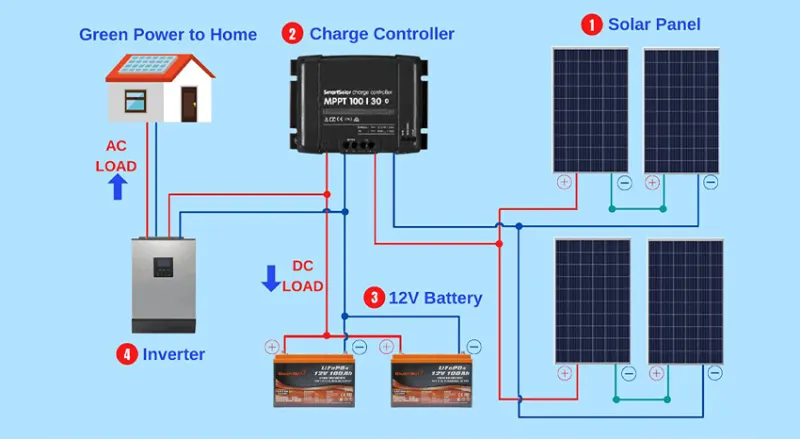
Charge controller compatibility. A 40A MPPT controller — one of the most common and well-tested units on the market — pairs naturally with 400–600W of panels on a 12V system. You're not running the controller at its ceiling, which means it runs cooler, lasts longer, and regulates more consistently.
Battery bank alignment. A properly sized 400–600W system pairs well with a 100–200Ah lithium battery bank or a 200Ah lead-acid setup. That pairing means your panels can realistically charge your bank from a meaningful deficit within a reasonable solar window — even in shoulder seasons. You're not waiting two days to recover from one cloudy stretch.
Real-world redundancy. With 400–600W, you have enough headroom to handle a panel that's partially shaded, a day that's mostly overcast, or a load spike from cooking with an induction burner. You're not white-knuckling it every afternoon wondering if you'll make it through the night.
Case Studies: Finding the Goldilocks Zone
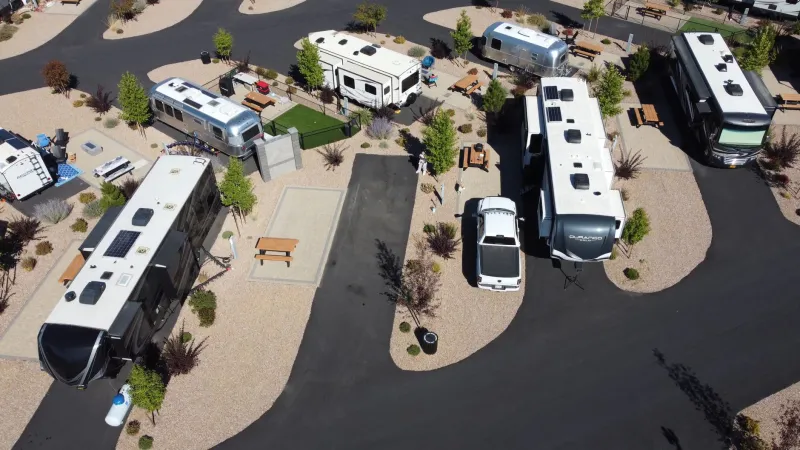
Marcy and Dave, full-time Airstream, Colorado/Utah corridor: They started with 200W and a single 100Ah lithium battery. Within six months, they'd added a second battery and two more panels, landing at 440W. That's where they stopped. "We can run the fridge, the diesel heater fan, and charge everything we own without thinking about it," Marcy said. "We only plug into shore power when we want to, not because we have to."
Tom, off-grid cabin in rural Tennessee: Tom's cabin isn't mobile, so he had more roof space to work with. He initially planned a 1,000W system because "bigger is better." His installer talked him down to 560W after running actual load calculations. Two winters in, Tom hasn't touched his backup generator once. "The 560 handles everything. I don't know what I would've done with twice the panels."
Janelle, converted school bus, Pacific Northwest: The PNW is notoriously rough on solar due to cloud cover. Janelle runs 600W, which gives her enough buffer on gray days to keep her fridge and lighting going without generator support most of the year. She calls the extra panel she added last spring "the difference between stress and peace of mind."
How to Calculate Your Own Sweet Spot
You don't need to guess. Here's a simple framework:
- List every load you run daily. Include appliances, devices, lighting — everything. Note the wattage and how many hours per day each runs.
- Calculate daily watt-hours. Multiply watts × hours for each item, then add them up.
- Divide by your system voltage (12V) to get amp-hours. This is your daily Ah consumption.
- Factor in your solar window. Most of the US gets 4–6 peak sun hours daily. Use 4 for conservative planning.
- Divide your daily Ah by your peak sun hours. That's roughly how many amps your panels need to produce per hour — which translates directly to panel wattage.
For most full-time off-gridders running a realistic modern load — fridge, lighting, devices, occasional fan or small appliance — that math lands somewhere between 300W and 600W. Add 20–30% buffer for real-world inefficiencies, and you're squarely in the sweet spot.
The Takeaway
The 400–600W range isn't a magic number — it's a reflection of what most real people actually need when they do the math honestly. It's enough to handle genuine daily life without the complexity, cost, and maintenance overhead of a maxed-out build. And it's enough to stop the battery anxiety that comes with undersized systems.
If you're still in the planning phase, run your numbers before you buy anything. If you're already installed and frustrated, run them again. Chances are, the answer is somewhere in the middle — and that middle is a pretty comfortable place to land.