Less Really Is More: How Right-Sized 12V Solar Systems Beat the Overbuilds After Five Years
There's a certain kind of solar enthusiasm that hits people right around the time they first go off-grid. You start calculating loads, you read a few forums, and suddenly you're convinced that more panels, more batteries, and more everything is the only way to feel truly secure. It's understandable. Energy anxiety is real.
But here's the thing nobody talks about at the five-year mark: the people still running clean, reliable power off their setups aren't usually the ones who went biggest. More often than not, they're the ones who built modest, intentional systems — and then actually took care of them.
The Complexity Tax Nobody Mentions at the Point of Sale
Every component you add to a 12V solar system is a potential failure point. That's not pessimism — it's just physics. More panels mean more wiring runs, more connectors, more roof penetrations if you're on an RV, and more surface area exposed to UV, vibration, and weather. Each of those represents a place where something can eventually go wrong.
Large arrays also tend to demand more from their charge controllers, which means more heat cycling over time. Heat is the enemy of electronics, full stop. A controller that's regularly operating near its upper capacity limit is going to age faster than one that's comfortably handling a lighter load. It's the same reason highway-only miles are gentler on an engine than stop-and-go city driving.
None of this shows up in the spec sheet. You won't see "complexity tax" listed next to the wattage rating. But after five years? You feel it.
What Long-Term Off-Gridders Actually Report
Talk to people who've been living off solar for half a decade or more, and a pattern emerges. The ones running oversized systems — the folks who installed 800 watts "just in case" on a setup that realistically needed 400 — often describe a creeping maintenance burden that sneaks up on them.
Connections loosen. MC4 connectors that were fine at year one start showing resistance by year three. Roof-mounted panels on RVs get subjected to road vibration on every trip, and the more hardware you have up there, the more opportunities for something to work itself loose. One off-gridder in the Pacific Northwest described spending an entire weekend tracking down a voltage drop that turned out to be a single corroded junction in a six-panel string — a problem that wouldn't have existed with half as many panels.
Contrast that with folks running leaner systems — say, two or three 100-watt panels feeding a properly sized battery bank. They report fewer mystery faults, faster troubleshooting when something does go wrong, and a general sense that their system is manageable. They know every wire. They can trace every circuit. That familiarity pays dividends.
The Mechanical Reality of Bigger Arrays
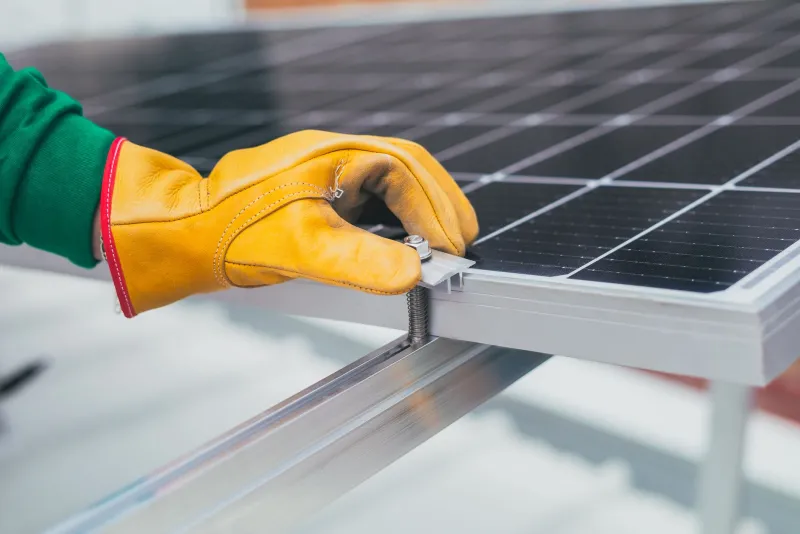
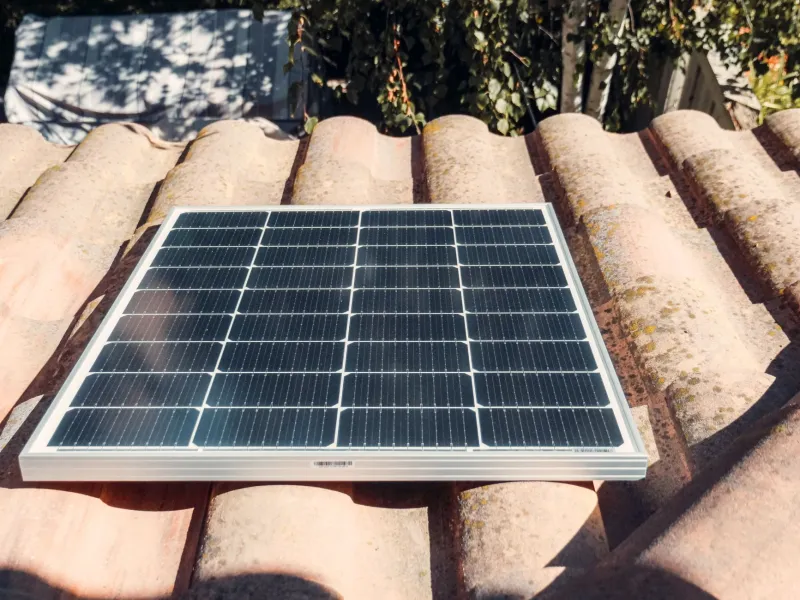
Roof space on an RV is a harsh environment. Panels expand and contract with temperature swings, mounting hardware sees constant stress, and sealants around penetrations degrade over time. Doubling your panel count doesn't just double your power — it doubles the number of mounting points, the number of wire runs, and the number of places where water can eventually find a way in.
Ground-mounted systems at fixed off-grid properties have their own version of this problem. More racking means more hardware exposed to freeze-thaw cycles, more fasteners that need periodic checking, and more surface area for dirt and debris to accumulate. Cleaning a four-panel array takes twenty minutes. Cleaning a sixteen-panel array takes most of a morning.
This isn't an argument against going solar in a meaningful way. It's an argument for building what you actually need, not what makes you feel safe in a spreadsheet.
Maintenance Burden Compounds Over Time
Here's a truth that gets glossed over in most solar content: a system you actually maintain outperforms a neglected system of any size. And larger systems are harder to maintain consistently. It's just human nature — the bigger and more complex a task feels, the easier it is to put off.
A well-maintained modest system with clean connections, a healthy battery bank, and a charge controller running well within its rated capacity will deliver more reliable power over five years than a sprawling overbuild that gets spot-checked once a season. Reliability is a function of attention, not wattage.
The off-gridders who've been at this longest tend to develop a kind of respect for simplicity. They've seen what happens when systems get complicated, and they've learned to value the setup they can actually understand and fix themselves, without calling in help or waiting on a part to ship.
Designing for Longevity, Not Just Capacity
If you're building a new 12V solar system — or rethinking an existing one — longevity should be part of the design criteria, not an afterthought. That means a few practical things:
Size for your real loads, not your theoretical worst case. Calculate what you actually use, add a reasonable buffer, and stop there. Oversizing "just in case" creates ongoing costs in complexity and maintenance.
Fewer, higher-quality components beat more, cheaper ones. Two well-made 200-watt panels with solid connectors will outlast four budget panels with mediocre hardware. This is especially true in mobile applications where vibration is a constant factor.
Choose a charge controller with room to breathe. A controller running at 60% of its rated capacity will last longer and run cooler than one consistently pushed to 90%. The headroom isn't wasted — it's buying you years.
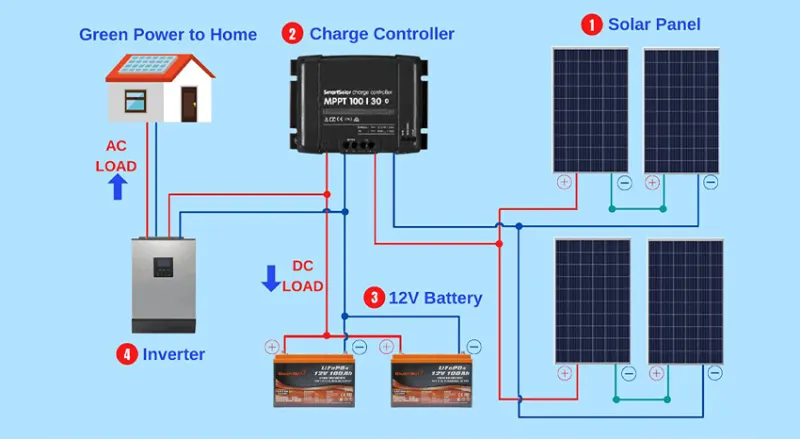
Document everything. Sketch your wiring diagram. Label your connections. Know where every circuit goes. When something eventually needs attention — and it will — that documentation is worth more than any amount of extra capacity.
The Five-Year Test
The solar industry loves to talk about 25-year panel warranties and decade-long system lifespans. Those numbers are achievable, but they assume a level of care and a system design that supports longevity. The oversized, under-maintained system that looked impressive on day one often tells a different story by year five.
The modest system, thoughtfully built and consistently cared for? That one's usually still humming along, its owner comfortable and confident, running on clean energy without drama.
There's a quiet satisfaction in that. Power your freedom — but build it in a way you can actually sustain.