Wash Day With No Generator: An Honest Power Budget for Off-Grid Laundry
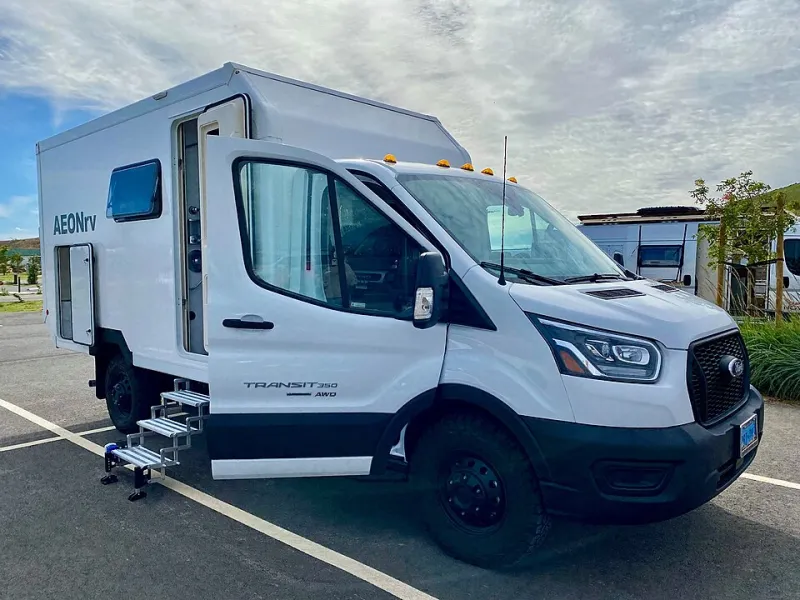
Photo: Devmaya333, CC BY-SA 4.0, via Wikimedia Commons
The laundry question comes up in every off-grid forum eventually, usually phrased as a confession. People will happily talk about composting toilets and propane fridges, but admitting you miss a real washing machine feels like a failure of the whole project.
It isn't. Washing clothes off-grid is a scheduling exercise with a small motor in the middle. Get the numbers right and it stops being a luxury and starts being a Saturday.
Three ways to get clothes clean
Hand washing. Zero watts, five to ten gallons of water, and about 45 minutes of your afternoon. A bucket, a plunger, and a wringer are the whole kit. Costs nothing to run, costs a lot in time, and gets clothes surprisingly clean if you're not scrubbing mud out of work pants.
Twin-tub portables. These are the off-grid workhorses — a wash tub on one side, a spin dryer on the other, sold for apartments and RVs. The wash motor draws around 200 to 350 watts and only runs intermittently during the cycle. The spin side pulls 100 to 150 watts for a few minutes. A full load of laundry takes maybe 30 to 45 minutes of wall-clock time but only a fraction of that at full draw. Realistic consumption: 0.10 to 0.20 kWh per load.
Compact and full-size front-loaders. Efficient enough to be genuinely viable if you have the array for it. A compact 120V front-loader on cold runs about 0.2 to 0.5 kWh per load. A full-size Energy Star front-loader on cold is in the 0.3 to 0.6 kWh range. The moment you turn on the internal water heater, all bets are off — a hot wash can jump to 1.5 to 2.5 kWh, and that's the entire day's solar production gone on one cycle.
There are also small 12V camping washers on the market. They work, they sip power, and they hold roughly one pair of jeans. Worth knowing they exist; not worth building a laundry routine around.
What a load really costs in amp-hours
Convert everything to amp-hours at 12 volts, including inverter losses of about 15%:
| Method | Energy per load | Amp-hours at 12V |
|---|---|---|
| Hand wash | 0 kWh | 0 Ah |
| Twin-tub portable | 0.15 kWh | ~15 Ah |
| Compact front-loader, cold | 0.35 kWh | ~34 Ah |
| Full-size front-loader, cold | 0.50 kWh | ~49 Ah |
| Full-size front-loader, hot wash | 2.0 kWh | ~196 Ah |
That table is the whole argument. Cold water and a modest machine put laundry in the same consumption class as running a fan for an afternoon. Hot water turns it into an event that requires its own weather forecast.
The surge nobody budgets for
Motors don't start politely. A washer that runs at 300 watts can spike to 700 or 900 watts for a fraction of a second when the drum starts turning. Your inverter has to survive that spike on top of whatever else is running.
A 1,000W pure sine inverter with a 2,000W surge rating handles a twin-tub comfortably. It will not handle a twin-tub, a fridge compressor, and a microwave all kicking on at once. Check your battery's BMS too — a 100Ah LiFePO4 with a 50A continuous limit will trip on a surge that a 100A unit shrugs off, and the fix is a bigger BMS, not a bigger fuse.
Building a sample Saturday
Assume a 400W array making a realistic 1.2 to 1.6 kWh on a decent winter day, and a 200Ah lithium bank sitting at 80%.
- Twin-tub load: 15 Ah
- Fridge, full day: 60 to 80 Ah in warm weather, less in winter
- Lights, phones, laptop: 20 Ah
- Water pump: 5 Ah
That's 100 to 120 Ah against a bank with 160 Ah of usable capacity. One twin-tub load fits easily. Two fit if the sun shows up. A compact front-loader load fits with room to spare — call it 34 Ah instead of 15, and you're still inside the budget on a sunny day.
Now run the same arithmetic on a two-week stretch of Pacific Northwest gray. The washer isn't the problem; the fridge is. Which is why laundry day belongs on the sunniest day of the week, not the most convenient one.
Timing beats efficiency
Run the machine between 10 a.m. and 2 p.m. — peak production, bank already near full, array carrying the load directly instead of cycling it through the battery. That one habit can cut the effective amp-hour cost of laundry by a third, because you never touch stored energy at all.
Pair it with a battery monitor you actually watch during the cycle, and treat the spin dryer as the moment to check the volts. If the bank is sagging under load mid-spin, you started too late in the day.
The water side of the equation
Power is half the problem. A twin-tub uses 10 to 15 gallons per load; a front-loader uses less. Cold-water washing with a high-efficiency detergent works fine for everything except grease and heavy soil, and it keeps your gray water simple enough to dump on the ornamental shrubs without drama.
The honest verdict
Two twin-tub loads a week on a 400W system is realistic. One compact front-loader load on a sunny day is realistic. Hot-water washes, a full-size machine, and a 200Ah bank in December is a generator in disguise.
Pick the machine that matches your array instead of the other way around, wash on the bright days, and laundry stops being the thing you miss about the grid.