Small Voltage, Big Life: Why 12V Solar Is Enough for Real Off-Grid Freedom
There's a story that gets repeated constantly in off-grid forums, YouTube comment sections, and RV Facebook groups across the country. It goes something like this: Sure, 12V solar is fine for beginners, but if you're serious about living off-grid, you'll eventually need to upgrade to a 48V system.
It sounds reasonable. It feels like wisdom passed down from experienced hands. And for the vast majority of Americans who want real energy independence — not a solar science project — it's completely wrong.
Let's talk about why that myth exists, who it actually benefits, and what the people quietly thriving on 12V setups already know.
Where the "Too Weak" Narrative Comes From
The idea that 12V systems can't handle serious off-grid living didn't come out of nowhere. It grew from a real technical truth that got stretched way past its usefulness.
Here's the kernel of fact: higher voltage systems do handle large power loads more efficiently over long wire runs. If you're building a 10,000-square-foot homestead with a commercial kitchen, a workshop full of three-phase tools, and a heated greenhouse, yeah — a 48V or even a grid-tied system probably makes more sense.
But that's not who's actually asking about 12V solar. Most people exploring this space are looking to power an RV, a tiny home, a hunting cabin, a van conversion, or a modest off-grid property. For those use cases, the "too weak" argument falls apart almost immediately when you pressure-test it.
The narrative also gets amplified by people selling bigger, more expensive systems. A 48V lithium setup with a 3,000-watt inverter carries a much fatter margin than a clean, well-designed 12V rig. That's not a conspiracy — it's just how incentives work.
What Real People Are Actually Running on 12V
Let's get specific, because abstract arguments don't pay electric bills.
Take a couple living full-time in a 28-foot fifth wheel in New Mexico. Their system: four 100W panels, a 40A MPPT charge controller, and 200Ah of lithium iron phosphate batteries. They run LED lighting throughout, a 12V refrigerator, a laptop, phone charging, a small Starlink dish, and a 12V fan system. Occasionally they run a small inverter for a coffee maker or a power tool. They have not plugged into shore power in over two years.
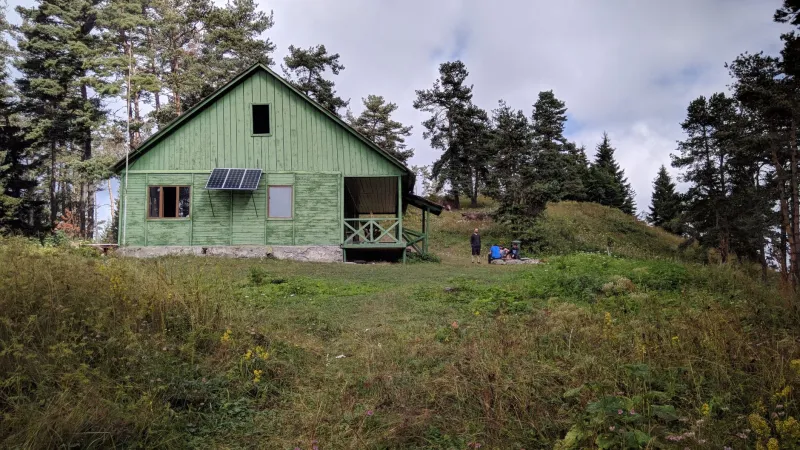
Or consider a guy in rural Tennessee with a 400-square-foot off-grid cabin. He's got six panels totaling 600W, a modest battery bank, and a chest freezer converted to a refrigerator. His lights are all 12V DC. He uses a propane stove and a wood stove for heat. His total solar investment? Under $2,000. He's been off-grid for four years.
Neither of these people needed a 48V system. Neither of them needed a $15,000 installation. What they needed was a well-matched 12V setup and the willingness to design their lifestyle around realistic consumption — which, it turns out, is exactly what off-grid living is supposed to teach you anyway.
The Complexity Tax Nobody Talks About
Here's something the "go bigger" crowd rarely factors in: complexity has a cost, and it compounds over time.
A 48V system requires 48V-compatible charge controllers, inverters, battery management systems, and wiring that supports the higher voltage safely. When something goes wrong — and something always eventually goes wrong — you're dealing with more specialized components, harder-to-source parts, and troubleshooting that often requires professional help.
A 12V system, by contrast, is almost universally understood. Components are widely available at hardware stores, auto parts shops, and online retailers. The wiring principles are the same ones that have powered boats, RVs, and vehicles for decades. If your charge controller fails at a campsite in Wyoming, you can often find a replacement within driving distance. Good luck sourcing a 48V-specific component in a rural area on a Sunday afternoon.
There's also the maintenance reality. Simpler systems break less often, and when they do break, they're easier to fix yourself. For someone who values independence — like, actual independence, not just independence from the utility company — that matters enormously.
Efficiency Isn't Just About Voltage
One of the technical arguments for higher voltage systems is reduced line loss over long wire runs. This is real physics. Higher voltage means lower current for the same wattage, which means less heat loss in the wires.
But here's the thing: for most 12V off-grid setups, wire runs are short. In an RV or van, your panels are on the roof and your battery bank is a few feet away. In a small cabin, the same logic applies. The efficiency argument for 48V becomes meaningful at scale — think commercial solar farms or large residential installations with panels hundreds of feet from the battery bank.
At the scale most off-gridders are actually working at, proper wire sizing on a 12V system delivers perfectly acceptable efficiency. Pair that with an MPPT charge controller (which already squeezes significantly more power out of your panels than older PWM designs), and you're not leaving meaningful energy on the table.
The Mindset Shift That Changes Everything
Maybe the most important thing separating people who thrive on 12V solar from people who feel like they're always chasing more power isn't the hardware. It's the mindset.
Grid-connected Americans are conditioned to think of electricity as unlimited and on-demand. Flip a switch, something happens. The idea of designing consumption around available generation feels like deprivation to people raised on unlimited utility power.
But off-gridders who've been at it for a while describe something different. They talk about becoming more intentional. About knowing exactly what their system can do and building a daily rhythm around that. About the satisfaction of running a household — or a home on wheels — entirely on energy they harvested from the sun.
That mindset is available to anyone with a well-built 12V setup. You don't need a massive system to get there. You need a system that's right-sized for how you actually live, maintained properly, and understood deeply.
So When Does It Make Sense to Go Higher Voltage?
Fair question — this isn't a blanket argument against 48V systems. If you're building a large permanent homestead with significant electrical loads, running power-hungry appliances that require substantial AC power all day, or if you have very long wire runs from your panels to your battery bank, a higher voltage system might genuinely serve you better.
But that describes a minority of the people who come to this site asking how to cut their energy bills, power their RV adventures, or build a life that doesn't depend on a utility company.
For everyone else — the van lifers, the tiny home builders, the RV full-timers, the cabin owners, the weekend warriors — 12V solar isn't a compromise. It's the right tool for the job.
The Bottom Line
The myth that 12V systems are too weak for real independence has kept a lot of Americans tethered to the grid longer than they needed to be. It's sent people down expensive, complicated rabbit holes when a straightforward, well-designed 12V setup would have gotten them where they wanted to go years earlier.
Real freedom doesn't require the biggest system on the block. It requires the right system — one you understand, can maintain, and that matches your actual life. For most of us, that system runs on 12 volts.