When More Batteries Actually Hurt: The Spring Charging Trap Nobody Warns You About

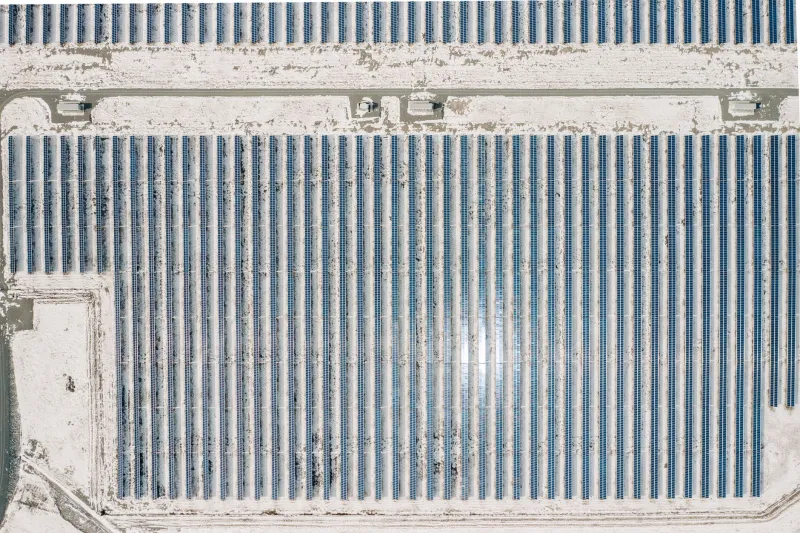
Photo: US Army Africa from Vicenza, Italy, CC BY 2.0, via Wikimedia Commons
Here's a scenario that plays out every spring across RV parks, homesteads, and off-grid cabins from Montana to Florida: someone spends the winter wishing they had more battery storage. Long nights, weak solar production, and that 3 a.m. anxiety about the inverter shutting down — it all adds up. So they buy more batteries. Maybe double what they had.
Then spring arrives, the sun comes back strong, and something weird happens. The system doesn't get better. The batteries start acting sluggish. A lead-acid bank that was fine a year ago now reads low by morning even after a full sunny day. A lithium bank that was supposed to last a decade is showing early signs of capacity loss.
The panels didn't fail. The charge controller is fine. The problem is the batteries themselves — or more accurately, the ratio between how much storage you added and how much charging power you actually have.
The Math That Bites You in Spring
Winter off-grid life has a way of making battery storage feel like the limiting factor. And during those short December and January days, it often is. Your panels are producing maybe 40–60% of their rated output due to low sun angles and limited daylight hours. If you're running out of juice by 9 p.m., more amp-hours sounds like the obvious fix.
But solar panel output doesn't stay flat. By March and April, production climbs sharply. A 400-watt array that was delivering maybe 100–120 usable amp-hours per day in January might push 180–220 amp-hours by late April. That's a significant jump — and your system has to be sized to actually use that energy productively.
Here's where the trap springs shut. If you doubled your battery bank over the winter — say, from 200Ah to 400Ah — you now need roughly twice the charging current to bring that bank to full charge in a reasonable daily window. If your panels can't deliver that, your batteries spend day after day sitting at 70%, 75%, maybe 80% state of charge. Never quite full. Never properly topped off.
For lead-acid batteries, this is a slow death sentence. The condition is called sulfation — lead sulfate crystals form on the plates when the battery chronically sits below full charge. It's irreversible past a certain point, and it can destroy a battery bank that otherwise had years of life left.
Lithium iron phosphate (LiFePO4) batteries are more forgiving, but they're not immune. Cells that never reach a full charge cycle start to drift out of balance. The battery management system (BMS) works overtime compensating. Long-term capacity quietly erodes.
The Ratio That Actually Matters
The rule of thumb most experienced off-gridders land on is this: your solar array should be capable of fully charging your battery bank in five to eight hours of good production. That's not peak hours — that's realistic, usable solar hours for your region and season.
For lead-acid batteries, the math looks like this: a 200Ah 12V bank needs to receive roughly 20–25 amps continuously for several hours to reach full charge (accounting for charge efficiency and the absorption phase). A 400-watt array with a quality MPPT controller might deliver 25–30 amps at 12V under good conditions. That math works.
Double the bank to 400Ah without adding panels, and now you're asking that same array to do twice the work. On a perfect day in June, maybe it squeaks by. On a partly cloudy spring afternoon in, say, Tennessee or Oregon? Your bank ends the day at 78% and starts the night already depleted.
A more reliable target: plan for roughly 100–150 watts of panel capacity per 100Ah of lead-acid storage, assuming average US sun hours. For lithium, you have a little more flexibility — LiFePO4 accepts charge more efficiently and tolerates partial states of charge better — but 100 watts per 100Ah is still a solid baseline to maintain battery health over time.
Spring Is When the Problem Becomes Visible
Why does spring specifically expose this mismatch? A few reasons.
First, usage patterns change. In winter, many off-gridders are conservative — fewer loads, shorter days, more generator use to compensate. Spring brings more activity, more devices running, longer hours, and the assumption that the solar system can handle it. It can't always.
Second, spring weather is inconsistent. Unlike summer, which delivers relatively predictable high-production days across most of the US, spring mixes sunny stretches with overcast systems, rain, and variable temperatures. A battery bank that needs full sun every single day to reach charge just won't get there reliably in April.
Third, this is when you stop watching the system as closely. Winter anxiety kept you checking the voltage every morning. Spring optimism makes you assume everything's fine. Meanwhile, the undercharging cycle continues unnoticed.
How to Diagnose Whether You Have a Ratio Problem
Pull up your charge controller's history if it has logging capability — most quality MPPT units do. Look at how often your battery bank is actually hitting absorption phase (the high-voltage, tapering-current phase that indicates a nearly full charge). If you're seeing bulk charging all day and rarely hitting absorption, your panels are working hard but never finishing the job.
For lead-acid systems, a hydrometer is your friend. Check specific gravity across cells after a full sunny day. If readings are low and inconsistent, sulfation may already be underway.
For lithium systems, look at cell voltage spread during charging. A well-balanced pack should have cells within a few millivolts of each other. Larger spreads suggest the BMS is struggling to balance a bank that isn't completing full cycles.
Fixing the Mismatch Without Starting Over
The good news: you usually don't have to tear everything out and start fresh. A few targeted moves can bring things back into balance.
Add panels before adding batteries. This sounds obvious once you understand the ratio, but it's the opposite of how most people approach winter storage anxiety. If your bank is chronically undercharged, more solar output solves it faster than any battery swap.
Run a deliberate equalization charge on lead-acid banks (if your chemistry supports it) to break down early sulfation. Some MPPT controllers have this built in — check your manual. It won't reverse severe sulfation, but it can recover mildly affected banks.
Reduce the bank temporarily. If you added batteries over the winter and can still return or repurpose them, consider dropping back to a size your array can reliably charge. A smaller, fully charged bank outperforms a larger, chronically partial one every single time.
Set a low-voltage disconnect threshold that forces you to notice when your bank is struggling. If your system is shutting down at 11.8V before midnight, that's data telling you something's wrong with the charging equation.
The Bigger Lesson About Off-Grid Balance
Off-grid solar isn't really about maximizing any single component. It's about balance — between generation and storage, between capacity and charging capability, between what the system can deliver and what your actual daily life demands.
More batteries feel like security. And they can be, if your panel array grows with them. But a bank your system can't keep full is worse than a smaller bank that stays healthy. It costs more upfront, fails sooner, and gives you less usable power in the meantime.
Spring is the season that tells the truth about your system design. Pay attention to what it's saying.