Sleeping on the Job: How Phantom Loads Are Quietly Murdering Your 12V Battery Bank
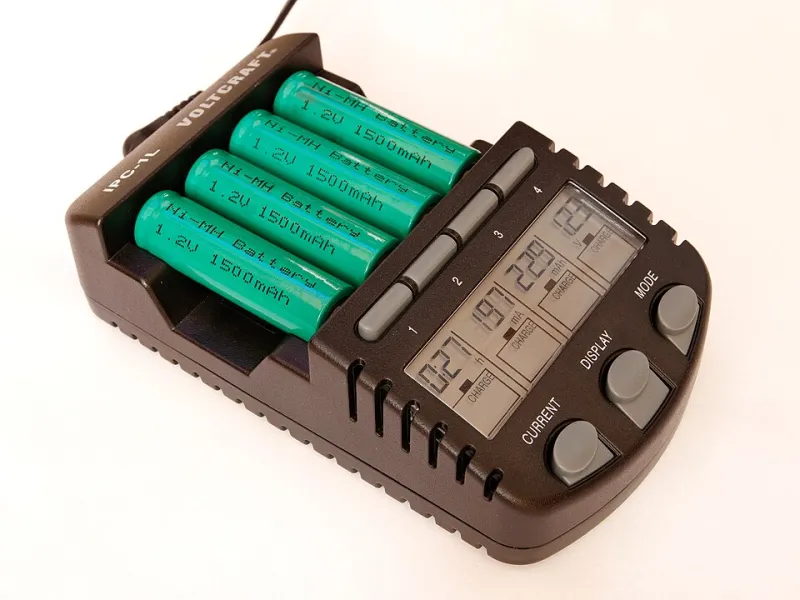
Photo: Medvedev, CC BY-SA 3.0, via Wikimedia Commons
You wake up at 6 a.m., step outside your RV or cabin, glance at your battery monitor, and the number staring back at you just doesn't add up. Your panels were running strong yesterday. You weren't exactly running a Vegas buffet off your inverter. So why is your state of charge 20 percent lower than it should be?
Welcome to the phantom load problem — one of the most underestimated energy leaks in any 12-volt off-grid setup.
What Exactly Is a Phantom Load?
A phantom load (also called a parasitic draw or standby power drain) is any device or component that consumes electricity even when you think it's off or not in active use. In a grid-tied home, this is mostly just an annoyance — a few extra bucks on your utility bill. In a 12V off-grid system with a finite battery bank, it's a genuine threat to your energy independence.
Think of your battery bank like a gas tank with a slow leak. Every morning you're starting the day already behind, and your solar panels have to spend precious daylight hours just recovering what was lost overnight — before they can actually get ahead.
The Usual Suspects in a 12V System
Not all phantom loads are created equal. Some are tiny drips. Others are surprisingly aggressive. Here's where they tend to hide:
Inverters on standby. This is the big one. Many modified sine wave and even some pure sine wave inverters draw between 0.5 and 2 amps continuously just sitting in standby mode. At 1 amp over 10 hours, that's 10 amp-hours gone before you've made a single cup of coffee. Over a month, you're looking at 300 Ah of wasted capacity — potentially a significant chunk of your entire bank.
Propane detectors and CO monitors. These are code-required in most RVs and many off-grid cabins, and they never truly turn off. Most draw between 0.1 and 0.3 amps around the clock. Not huge individually, but they never stop.
Charge controllers with displays and Bluetooth. Modern MPPT controllers are genuinely efficient at what they do, but their onboard displays, LED indicators, and wireless communication modules all nibble at your battery 24/7. Some units draw as little as 5 milliamps; others creep up to 50 or more.
Refrigerators cycling off-cycle. A 12V compressor fridge doesn't run constantly, but its control board and thermostat are always powered. That idle draw is small — maybe 20–40 milliamps — but again, it never stops.
Devices plugged into USB ports or 12V outlets. Phone chargers, USB hubs, and car-style adapters often draw power even with nothing plugged into them. Check yours with a meter — you might be surprised.
Water pump pressure switches. If your system holds pressure, the pump isn't running — but the pressure switch is still active and monitoring. Small draw, but consistent.
How to Actually Find Your Phantom Loads
You don't need expensive equipment for a solid phantom load audit. A basic DC clamp meter (available at most hardware stores for under $40) and a little patience will get you most of the way there.
Step 1: Start with everything off. Shut down every device you can — inverter, fridge, lights, everything. Check your battery monitor's amp reading. Whatever you see is your baseline phantom draw.
Step 2: Isolate by circuit. If your system has a fuse block or breaker panel, pull one fuse at a time and watch the amp reading drop. When you pull a fuse and the number changes noticeably, you've found a phantom load circuit worth investigating.
Step 3: Use a watt meter on individual devices. For AC devices running through your inverter, a Kill-A-Watt meter ($20–$30 at most big box stores) plugged in between the outlet and the device will show you standby draw in real time.
Step 4: Log it overnight. If you have a battery monitor that tracks historical data — like a Victron BMV series or a Renogy shunt monitor — let it run for a full night with a known starting charge and check the discharge curve in the morning. Unusual overnight drops tell the whole story.
Putting a Real Number on the Damage
Let's do some quick math. Say your phantom loads add up to a combined 2 amps of continuous draw. Over 12 hours of darkness:
- 2A × 12 hours = 24 Ah per night
- 24 Ah × 30 nights = 720 Ah per month
- 720 Ah × 12 months = 8,640 Ah per year
At an average solar production cost equivalent, that's a lot of wasted sunlight. For someone with a modest 200Ah lithium battery bank, that phantom draw is eating roughly 12 percent of usable capacity every single night — just to maintain a baseline that should be zero.
Practical Fixes That Actually Work
Install a master cutoff switch. A simple battery disconnect switch on your main positive line lets you kill parasitic draw from the entire system when you're away or sleeping. These run $15–$40 and take an hour to install. For seasonal RVers, this is non-negotiable.
Put your inverter on a switched circuit. Wire your inverter through a dedicated toggle switch so it's only energized when you actually need AC power. This single change eliminates one of the biggest phantom draws in most systems.
Replace older analog charge controllers. Older PWM controllers with always-on displays can draw significantly more standby power than modern MPPT units. If yours is more than five years old, the efficiency gains from an upgrade likely pay for themselves faster than you'd think.
Use smart power strips for entertainment setups. If you run a TV, streaming stick, or gaming setup off your inverter, a smart strip that cuts power to peripheral devices when the main unit is off can eliminate several small draws at once.
Audit your USB and 12V outlets. Unplug anything you're not actively using. If a port is drawing power with nothing connected, consider a switched outlet or simply pull the fuse when not in use.
The Bigger Picture
Off-grid living is all about maximizing every watt your panels produce. You spend real money on solar panels and batteries — it makes zero sense to quietly hand a significant portion of that investment back to the grid of phantom loads every night.
Spending an afternoon with a clamp meter and a notepad might be the highest-return investment you make in your entire 12V system. The solar energy is there. The storage is there. You just have to stop the leaks.