More Panels, More Problems: The Off-Grid Solar Sizing Trap That's Draining Wallets (And Batteries)
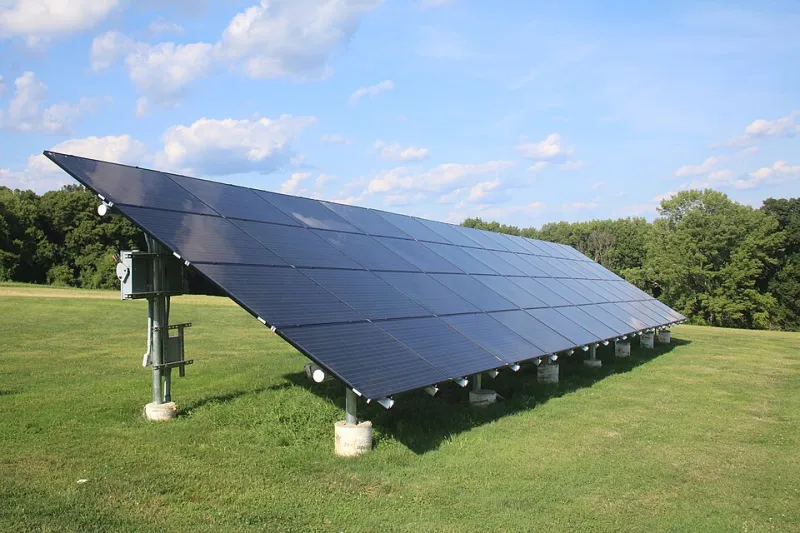
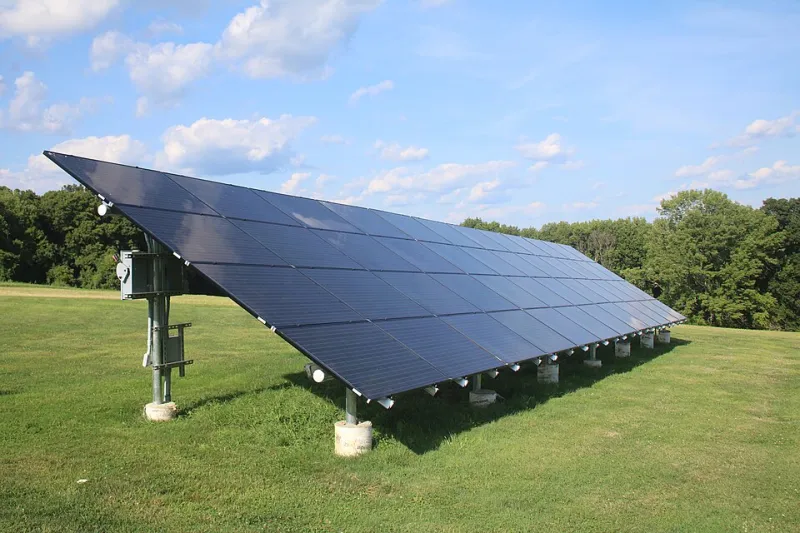
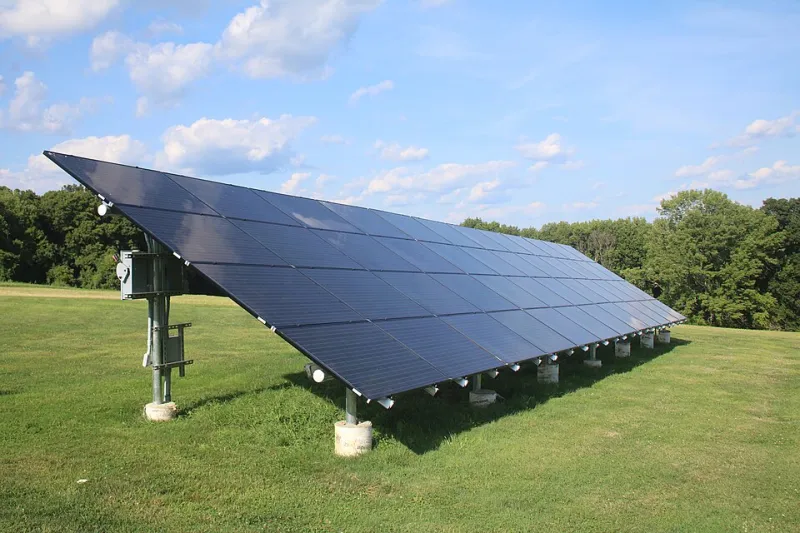
Photo: Grendelkhan, CC BY-SA 4.0, via Wikimedia Commons
There's a deeply human impulse at work when people start planning their first 12V solar setup: if two panels are good, four must be better. If 200 amp-hours of battery storage gets you through a cloudy day, surely 400 will get you through a cloudy week. Stack it high, wire it wide, and never worry about power again.
It's a compelling story. It's also how a lot of off-gridders end up spending thousands of extra dollars on equipment that doesn't just fail to help — it actively makes their system worse.
Let's talk about why bigger isn't automatically better, where the real ceiling is in a 12V solar setup, and — yes — when going large genuinely does make sense.
The Equipment Math Nobody Warns You About
Here's the thing that tends to blindside first-timers: every component in a 12V solar system has a ceiling. Your charge controller can only handle so many amps of incoming current. Your battery bank can only absorb charge at a certain rate. Your wiring has a maximum safe current capacity. Slap more panels on top of a system that's already bumping against those limits and you don't get more power — you get heat, waste, and potentially damaged hardware.
Take a common scenario. You've got a 30-amp PWM charge controller paired with a 200Ah AGM battery bank. You started with two 100-watt panels, which was working fine. Then you picked up two more panels on sale because, hey, why not? Now you're pushing more current into that controller than it was rated to handle during peak sun hours. The controller clips the excess. Your batteries still only charge at the same rate they always did. You spent $300 on panels that contribute almost nothing useful to your daily energy budget.
This isn't a fringe case. It's one of the most common (and most expensive) mistakes in the off-grid solar world.
What Oversizing Actually Does to Your Batteries
Battery degradation is the hidden cost that makes oversizing genuinely painful over time. AGM and flooded lead-acid batteries, which still dominate a huge chunk of the 12V off-grid market, have a recommended charge rate — typically expressed as a fraction of their capacity (C/10 or C/5, for example). Pumping charge in faster than that threshold generates excess heat inside the cells, accelerates plate corrosion, and shortens the lifespan of a battery that was supposed to last you five or more years.
Lithium iron phosphate (LiFePO4) batteries handle higher charge rates more gracefully, but even they have upper limits. And here's the kicker: if your solar array is dramatically oversized relative to your battery bank, you're not just wearing out your batteries faster — you're also wasting the sun's energy during the hours when your batteries are already full and your loads are light. That power just... disappears.
Proper sizing keeps your batteries in their happy zone: charging consistently, not too fast, not sitting at partial state of charge for days at a time.
The Seasonal Variable Everyone Ignores Until Winter
One reason people overbuy on panels is that they design their system for a worst-case scenario — the cloudy week in January when the sun barely clears the treeline. That's not inherently wrong. Accounting for seasonal variation is smart planning. The mistake is treating that worst-case number as your baseline and then scaling everything else around it.
If you size your array to fully charge a 200Ah battery bank on the worst December day in the Pacific Northwest, you've built a system that's wildly oversized for every sunny day from April through October. You'll be clipping power constantly during summer, running your charge controller hot, and potentially dealing with the battery issues described above — all while paying for panels you only truly needed about 60 days a year.
A smarter approach: size for your average conditions with a modest buffer, and use a generator or shore power as a supplement during genuinely difficult stretches. That hybrid mindset almost always beats trying to solar-power your way through every possible weather scenario.
So How Do You Actually Find the Sweet Spot?
Start with your real daily energy consumption — not a wish list, not a worst-case scenario, your actual average daily load in watt-hours. Add up everything: the 12V fridge cycling on and off, the LED lighting, the fan, the phone chargers, the occasional laptop. Be honest. Most RV and off-grid setups land somewhere between 100 and 600 watt-hours per day depending on lifestyle.
From there, figure out how many peak sun hours your location realistically gets. The National Renewable Energy Laboratory's PVWatts calculator is a free tool that gives you solid estimates for any zip code in the US. Take the conservative number — not the best summer day, but the average across your travel months or your primary season.
Divide your daily watt-hour need by your peak sun hours. That gives you your target panel wattage. Add 20 to 25 percent as a real-world efficiency buffer. Then make sure your charge controller can handle that array, and that your battery bank is sized to store roughly 1.5 to 2 days of consumption without going below 50 percent depth of discharge (or 80 percent for LiFePO4).
That's your system. Not the biggest system. The right system.
When Bigger Actually Is Better
Okay, fair is fair — there are absolutely situations where a larger array makes complete sense.
If you're running a full-time off-grid homestead with serious loads (well pump, chest freezer, power tools, a family's worth of devices), the math simply demands more panels and a bigger battery bank. There's no clever workaround for high consumption; you need the generation capacity to match.
If you're frequently parked in partial shade — under trees at a campsite, tucked into a canyon, dealing with rooftop obstructions — oversizing your panel array is a legitimate strategy to compensate for consistent shading losses. More panels give you more surface area to catch whatever light makes it through.
And if you're building a system with significant expansion in mind — adding a second fridge next year, planning to run an air conditioner unit, thinking about an electric bike charging station — sizing up your charge controller and battery bank now (even before you add all the panels) can save you from a full system redesign down the road.
The difference is intentionality. Oversizing because you thought more was automatically better is a mistake. Oversizing because you've done the math and have specific, concrete reasons is just good planning.
The Bottom Line
Freedom off the grid doesn't come from the biggest array you can bolt onto your roof. It comes from a system that's dialed in — one where every component is pulling its weight, your batteries are living their best life, and you're not paying for capacity that just generates heat and headaches.
Do the load calculation. Respect the component limits. Build for your actual life, not the hypothetical one where you run everything at full blast during a week of December clouds in Alaska. Your wallet, your batteries, and your future self will all be a lot happier for it.