That Wattage Sticker on Your Solar Panel Is a Lie — Here's What You're Really Getting
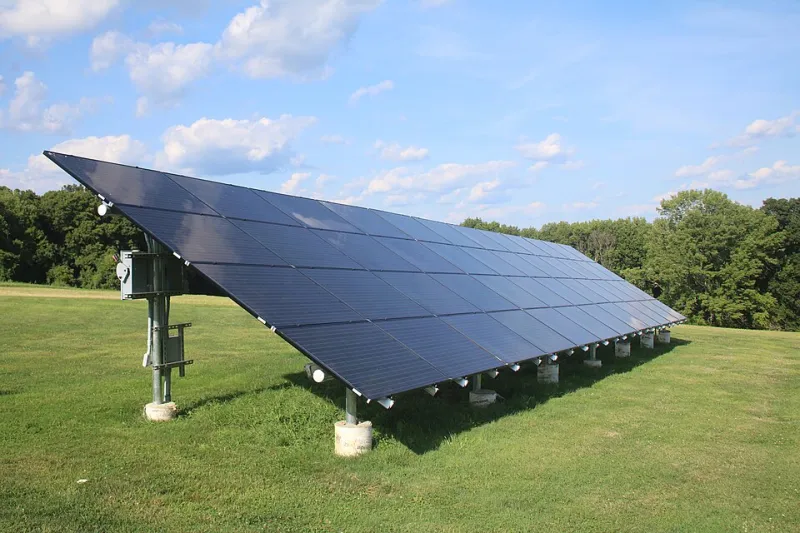
Photo: Grendelkhan, CC BY-SA 4.0, via Wikimedia Commons
You did the research. You bought the panels. You did the math — 400 watts of solar should be plenty to keep your RV batteries topped off, right?
Then you're sitting in a campground in Arizona in July, batteries hitting 50% by 3pm, wondering what went wrong.
What went wrong is that the number printed on your solar panel is essentially a best-case fantasy. It's not fraud, exactly — but it's not the whole story either. And for RV owners and off-grid folks trying to size a reliable 12V system, the gap between rated wattage and actual output can mean the difference between comfortable living and rationing every amp.
Let's break down exactly why that number lies, and what you should actually be planning around.
What That Wattage Rating Actually Means
Every solar panel ships with a rating called its STC output — Standard Test Conditions. Under STC, the panel is tested at exactly 1,000 watts of irradiance per square meter (basically perfect midday sun), a cell temperature of 77°F (25°C), and zero wind. Clean panel, perfect angle, lab setting.
In the real world, your panel sits on a metal roof that bakes in the sun, gets coated in road dust, sits at whatever angle your RV happens to be parked at, and deals with clouds rolling through. None of that matches STC.
A more realistic benchmark is PVUSA Test Conditions (PTC), which accounts for ambient temperature and wind. PTC ratings run roughly 10–15% lower than STC. But even PTC doesn't capture everything that hammers your output in everyday use.
The Four Killers of Real-World Solar Output
1. Heat (Yes, Hot Sun Hurts Your Panels)
This one surprises most people. Solar panels actually produce less power as they get hotter. The spec sheet on your panel includes a "temperature coefficient" — usually somewhere around -0.35% to -0.50% per degree Celsius above 25°C.
So what does that mean in practice? On a sunny summer day, your roof-mounted panel might reach 140–160°F (60–71°C). That's 35–46°C above the STC baseline. At a -0.45% coefficient, you're losing 16–21% of rated output just from heat — before accounting for anything else.
A "200W" panel in that scenario might be pushing out closer to 158–168W at peak.
2. Angle and Orientation
Solar panels produce maximum power when sunlight hits them at a perfect 90-degree angle. Tilt away from that, and output drops. Your RV roof is flat (or close to it), which means you're almost never at the ideal angle — especially in the morning and evening hours when the sun is lower in the sky.
In the northern US during winter, a flat-mounted panel might only catch 3–4 peak sun hours per day even on a clear day, compared to 5–6 in summer. Seasonally, that alone can cut your daily harvest nearly in half.
3. Shading — The Silent System Killer
Even a small shadow on one corner of a panel can wipe out a surprising chunk of output. Traditional solar panels wire cells in series, meaning a shadow on even one cell creates a bottleneck for the whole string. A vent pipe, an awning arm, a tree branch — any of these can drop a 200W panel to 80W or less.
If you're running multiple panels wired in series, shading one panel can drag down the entire array. This is why panel placement matters enormously on RV rooftops, where AC units, vents, and antennas are everywhere.
4. Dust, Grime, and That Mysterious Film
After a few weeks of highway driving, your panels are coated in a fine layer of road grime, bug residue, and dust. Studies on residential installs have found that soiling alone can reduce output by 5–25% depending on environment and time since last cleaning. Desert travelers deal with this constantly. It's easy to overlook, but it adds up fast.
What You'll Actually Harvest: A Realistic Output Comparison
Here's a rough look at what a "200W" panel realistically delivers under different conditions:
| Condition | Estimated Actual Output |
|---|---|
| STC (lab perfect) | 200W |
| Ideal outdoor, clean, optimal angle | 170–185W |
| Summer, flat-mounted, hot roof | 155–170W |
| Summer, partial cloud cover | 80–130W |
| Winter, flat-mounted, northern US | 100–140W |
| Dusty panel, summer | 130–155W |
| Partial shading (one edge) | 60–110W |
And remember — wattage is only half the equation. Daily energy harvest (watt-hours) depends on how many peak sun hours your location gets. Phoenix, Arizona averages about 6.5 peak sun hours daily. Seattle, Washington? Closer to 3.5 in winter. The same panel setup produces dramatically different results depending on where you're parked.
The Right Way to Size Your System
Instead of starting with panel wattage, start with your actual daily power consumption in watt-hours. Add up everything you run — fridge, lights, phone charging, fan, laptop — and figure out your real daily load.
Then apply a "derate factor" to your panel array. A commonly used real-world efficiency factor is around 0.75 to 0.80 — meaning you plan around getting 75–80% of your rated panel output under typical conditions. Some conservative planners go as low as 0.65 for heavily shaded or dusty environments.
So if you need 600Wh per day and you're in a region with 4.5 peak sun hours:
- Naive calculation: 600Wh ÷ 4.5h = ~133W of panels needed
- Realistic calculation: 600Wh ÷ (4.5h × 0.75) = ~178W of panels needed
That gap is exactly why so many RV owners end up undersized and frustrated.
Don't Let the Spec Sheet Run Your Setup
Manufacturers aren't lying to you outright — STC ratings are an industry-standard comparison tool, and they're useful for comparing panels against each other. But they were never meant to be a promise of what shows up in your battery bank.
The RV owners and off-grid enthusiasts who build systems that actually work are the ones who plan around realistic output, not optimistic stickers. Add a little buffer capacity. Clean your panels regularly. Think about shade before you mount. And when someone tells you their 400W system "should" cover everything — ask them what conditions they're assuming.
Because out here on the road, real power matters a lot more than rated power.