PWM vs. MPPT: The Charge Controller Decision That Actually Determines How Far Off-Grid You Can Go
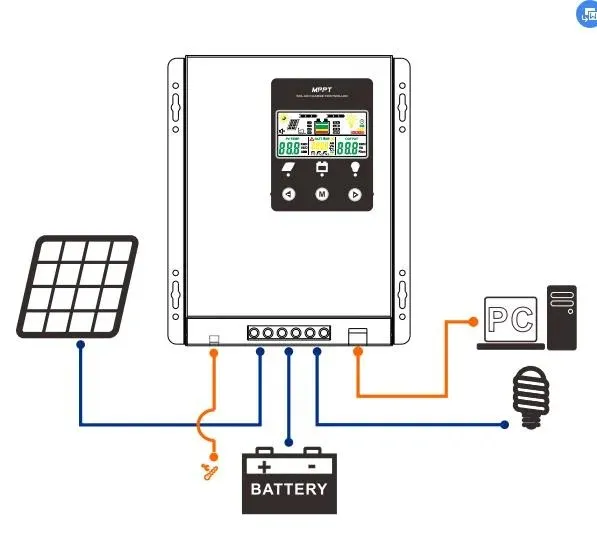
Photo: MPPT solar charge controller wiring battery bank RV, via i1.wp.com
Talk to most people planning a 12V solar setup for their RV or off-grid cabin, and they'll happily geek out about panel brands, wattage, and battery chemistry for hours. Ask them about their charge controller, and you usually get a shrug.
That's a problem — because the charge controller might be the single most consequential component in your entire system. It doesn't just protect your batteries. It determines how efficiently your panels actually work, how much energy you capture on cloudy days, and ultimately, whether you can stay self-sufficient for a week in the mountains or whether you'll be hunting for a hookup by day three.
Let's fix the knowledge gap.
What a Charge Controller Actually Does
At its most basic, a charge controller sits between your solar panels and your battery bank and does two things: it prevents your batteries from overcharging, and it manages the charging process to keep your batteries healthy over time.
But how it does those things — that's where the two main types, PWM and MPPT, diverge significantly.
PWM: Simple, Affordable, and Honest About Its Limits
PWM stands for Pulse Width Modulation. A PWM controller works by directly connecting your panels to your battery bank and rapidly switching that connection on and off to regulate voltage. As batteries approach full charge, the controller shortens those pulses, easing off the power delivery.
It's a simple, reliable design that's been around forever, and it works fine — under specific conditions. The catch is that a PWM controller essentially forces your panels to operate at battery voltage. If your 12V battery bank is sitting at 12.5V, your panels are running at 12.5V regardless of what they're capable of producing.
Most 12V nominal panels are designed to operate at around 17–18V at their maximum power point. When a PWM controller clamps them down to 12.5V, you're leaving roughly 25–30% of potential output on the table. Every single day.
When PWM makes sense:
- Small systems (100W or less)
- Panels and batteries perfectly voltage-matched
- Tight budget, warm climate, simple needs
- A weekend cabin that just needs to keep a light and a radio running
MPPT: The Efficiency Upgrade That Changes What's Possible
MPPT stands for Maximum Power Point Tracking. An MPPT controller uses more sophisticated electronics to continuously find and operate at the voltage where your panels produce peak power — their "maximum power point" — and then converts that higher voltage down to what your batteries need, capturing the difference as usable current.
In plain terms: instead of forcing your panels to run at battery voltage, an MPPT controller lets them run at their sweet spot and uses a DC-DC converter to efficiently translate that into charging power. Depending on conditions, MPPT controllers typically deliver 20–30% more energy from the same panels compared to PWM — and in cold weather or low-light conditions, that gap can stretch even wider.
On a cold, clear morning in the Rockies, your panels might actually exceed their rated voltage. A PWM controller can't take advantage of that. An MPPT controller harvests every watt.
When MPPT is worth it:
- Systems 200W and above
- Any situation where you want to run higher-voltage panel strings
- Cold climates or locations with significant seasonal variation
- Anyone serious about full-time off-grid living or extended boondocking
The Real-World Impact on Your Off-Grid Range
Here's where it gets practical. Say you're running a 400W panel array with a 200Ah lithium battery bank. Your daily power needs run about 800Wh — a reasonable load for an RV with a compressor fridge, LED lighting, phone and laptop charging, and a fan.
With a PWM controller in summer conditions, you might realistically harvest 60–70% of your theoretical panel output, netting somewhere around 240–280Wh per 100W of panels per day in a decent sun location. That's roughly 960–1,120Wh daily from your 400W array — enough to cover your needs, but with thin margins.
With a quality MPPT controller, that same array in the same conditions might deliver 320–360Wh per 100W, putting you at 1,280–1,440Wh daily. Suddenly you have real headroom. You can handle a cloudy day without anxiety. You can run the microwave occasionally. You can stay at that remote campsite for another two days.
That difference — the margin between just-enough and genuinely comfortable — is what determines whether you can actually leave civilization without a backup plan.
Matching Controller Specs to Your Real Needs
Choosing the right controller isn't just about PWM vs. MPPT. The specs matter too, and getting them wrong is an expensive mistake.
Amperage rating: Size your controller for your panel array's short-circuit current (Isc), then add 25% safety margin. Running a controller at its absolute limit shortens its life and can cause problems in high-heat conditions.
Voltage input: If you want to wire panels in series (which reduces wire losses over long roof runs), make sure your MPPT controller's maximum input voltage can handle the combined open-circuit voltage (Voc) of your string — especially important in cold weather when Voc climbs.
Battery compatibility: If you're running lithium iron phosphate (LiFePO4) batteries — which most serious off-gridders are moving toward — confirm your controller has a dedicated lithium charging profile. Using a generic lead-acid profile on lithium batteries will either undercharge them or cause problems over time.
Load output: Some controllers include a direct load output terminal for running 12V accessories. Convenient, but check the amperage limit before you rely on it for anything significant.
A Simple Framework for Making the Call
Not sure which direction to go? Run through these questions:
- Is your system under 200W and budget is the priority? PWM will probably serve you fine.
- Are you planning to expand your array later? Go MPPT now — it's much easier than replacing the controller mid-build.
- Do you boondock more than a few nights at a stretch? MPPT's efficiency advantage is worth every penny.
- Are you in a northern state or somewhere with significant winter use? MPPT handles low-light and cold conditions dramatically better.
- Running lithium batteries? Get an MPPT with a proper lithium profile — non-negotiable.
The Component That Earns Its Keep
A quality MPPT controller from a reputable brand runs $80–$200 for most RV-scale systems. That's real money — but measured against the cost of an extra panel you wouldn't need, or a generator you'd otherwise have to haul around, it pays for itself fast.
The panels get all the glory. But the charge controller is the quiet workhorse that decides whether your system actually delivers on its promise. Choose it carefully, spec it correctly, and your whole off-grid setup gets more capable without adding a single watt of panel.