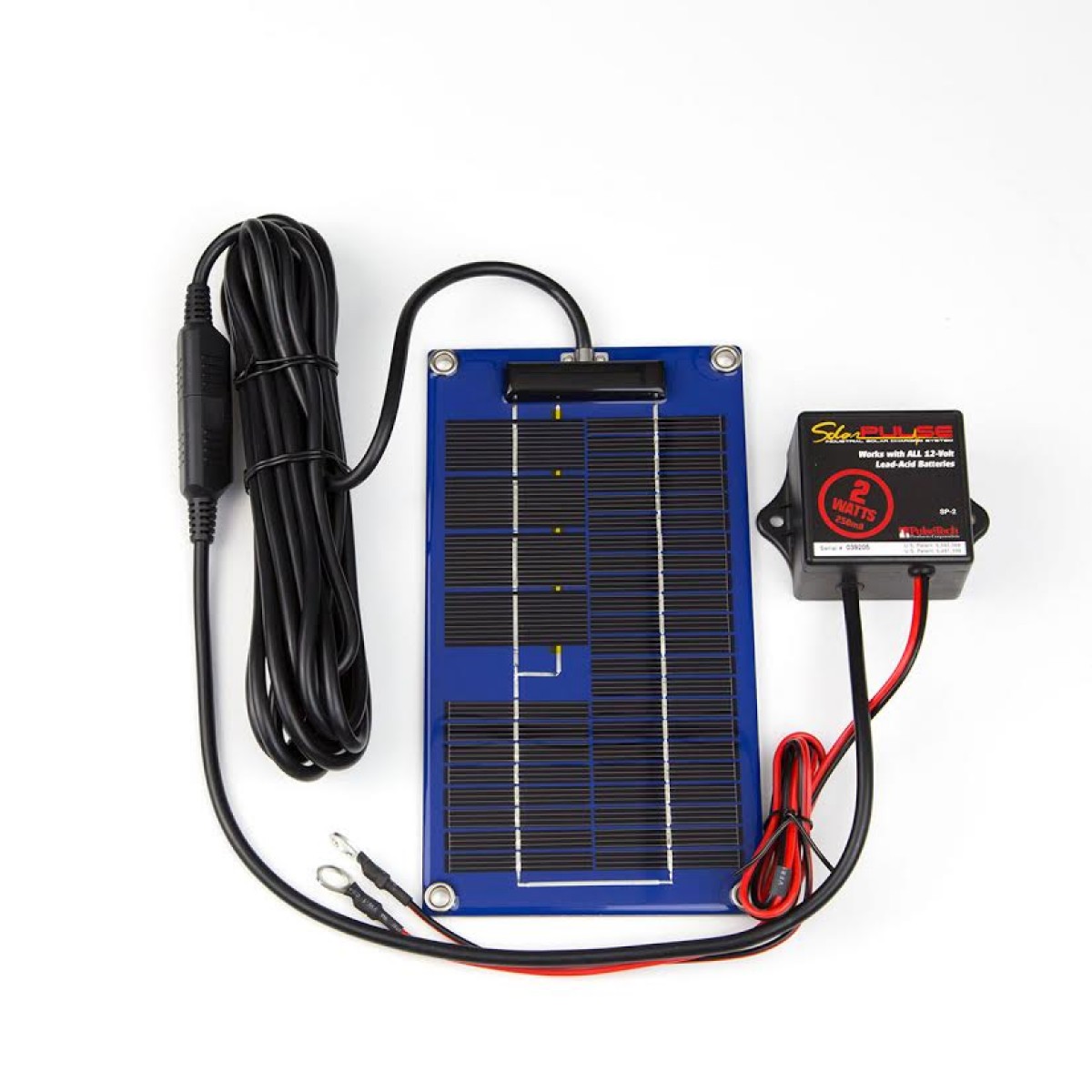
Solar Power can work well for most items except large electric appliances (water heater, clothes dryer and electric stove).
The basics of solar power:
Using solar power to produce electricity is not the same as using solar to produce heat.
- Solar thermal power is applied to produce hot fluids or air.
- Photovoltaic power is used to produce electricity.
Photovoltaic Panels
A photovoltaic panel is made of silicon, which becomes charged electrically when subjected to sun light. The more an array is situated off of true south the less the total insulation value.
To obtain electricity, solar panels are directed at south in the northern hemisphere and north in the southern hemisphere at an angle dictated by the geographic location and latitude of where they are to be installed.
The most common output is intended for nominal 12 volts, with an effective output usually up to 17 volts.
The intensity of the Sun’s radiation changes with the hour of the day, time of the year and weather conditions.
How to Calculate Solar Power
To be able to make calculations in planning a system, the total amount of solar radiation energy is expressed in hours of full sunlight per m².
One hour of full sun provides 1 kWh/m² (the solar energy received in one hour on a cloudless summer day on a one-square meter surface directed towards the sun).
Before establish the size of our solar system we need to set:
- The sunlight levels (insulation values) of our area
- The daily power consumption of our electrical loads.
Insulation, or sunlight intensity is measured in equivalent full sun hours. One hour of maximum, or 100% sunshine received by a solar panel equals one equivalent full sun hour.
For 1 day consider only six hours of equivalent full sun
(Consider reflection due to a high angle of the sun in relationship to your solar array and high angle and the amount of the earth’s atmosphere the light is passing through).
Because of these factors the most productive hours of sunlight are from 9:00 a.m. to 3:00 p.m.
Components used to provide solar power
The four primary components for producing electricity using solar power are:
- A Solar panel Charger
- A Charge controller (i.e. Brunton Solar Charge Controller)
- A Battery
- A Solar Inverter
Solar panels charge the battery (the controller insures proper charging) then the battery provides DC voltage to the inverter that converts the DC voltage to normal AC voltage.

Solar Panels
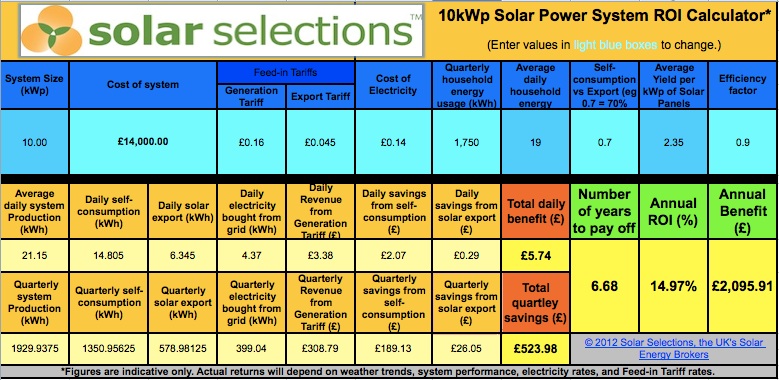
The output of a solar panel is usually stated in watts. Wattage is determined by:
V (volt) x A (ampere) = W (watt)
i.e. a 60 watt solar panel can (If an average of 6 hours of peak sun per day) produce an average 360 watt hours of power per day.


{ 8 comments… read them below or add one }
I need to how to produce electricity for home with solar system.if u complete package of solar system for home produce please send me information and qoutation.
thanks
Yes Ejaz, You can stay updated by clicking on this link http://feeds.feedburner.com/12VoltSolarPanels You’ll receive the updates directly in your rss reader.
I think I’ll post a new guide soon.
Have a look here for the moment:
That high tech diagram of yours made my head hurt!
LOL!
Nice guide about solar energy. I would like to comment about the 6 sun hours factor wich is very optimistic… There is also an online toll which can halp finding the exact solar energy you can get from the sun. Just google PVGIS. Keep up the good job!
a solar system for home
followin electric applincese are required to operat for duratioin mentioned below
03 energy savor bulb 25 w for 04 hours
03 Ceiling fan of 80w for 03 hours
01 desktop computyer of 300 w for 02 hours
Thanks for an early response
Hi
I gal my project but not started yet, what i need to know from you is about( solar panel,Inverter +charger )which Can i use to get a good out put to charge a cellphone/mobile phones more than 20pcs at a sametime x24/7days? also i want to install two bulbs of 25w energy server as security light duling night, this wil be use on area which there is no other source of energy. (electricity) can you include a price while replying? Thanks and advance.
i want to make an inverter too..can anybody help me in designing of 500 VA inverter